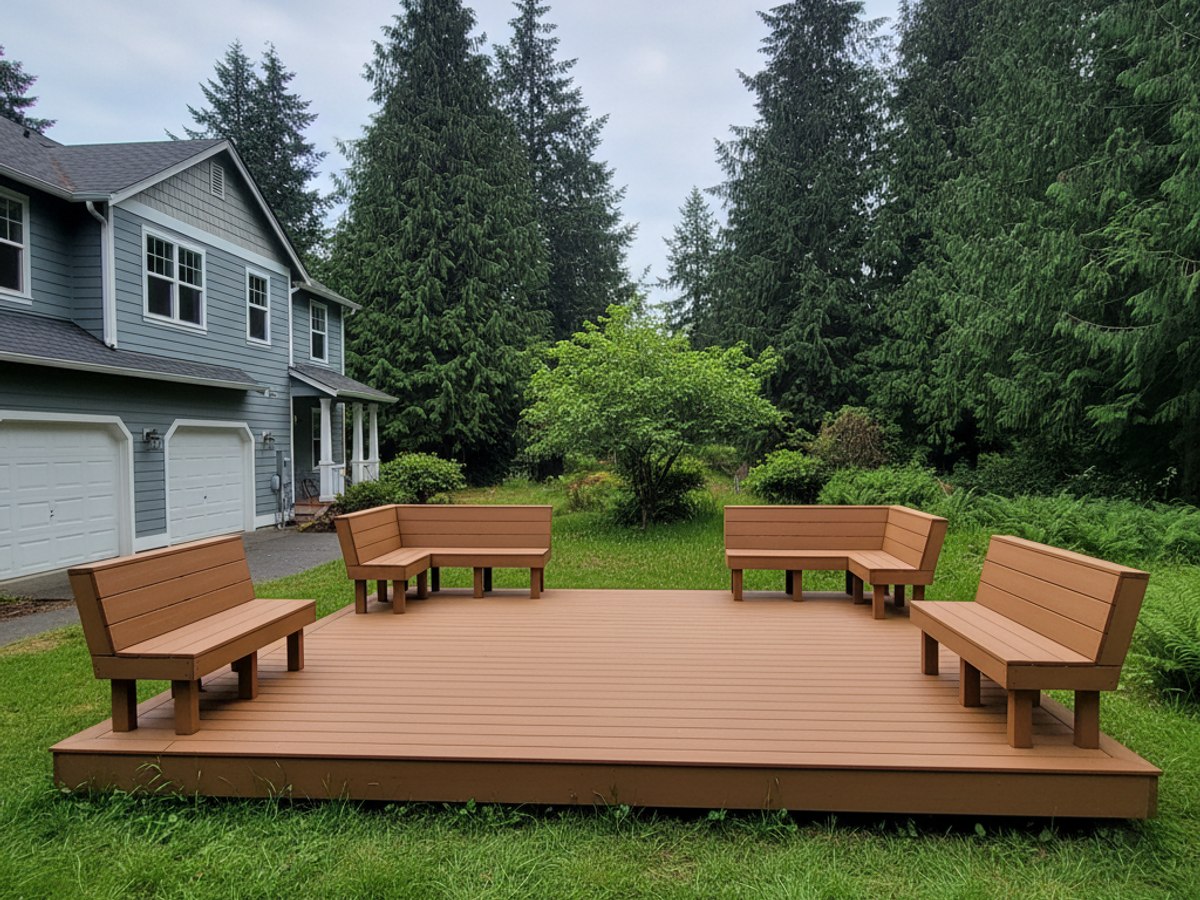
Ask five deck builders in Shoreline when the "best" time of year is and you'll get five different answers depending on what kind of work they do. That's because this isn't really one question. A new footing goes in the ground differently than a coat of stain goes on a board, and Shoreline's weather treats those two jobs very differently.
The short version: this part of King County gets roughly 37 to 40 inches of rain a year, and most of it falls between October and April. That one fact drives almost everything about scheduling deck work here, whether you're building new, replacing old boards, or just trying to get a stain job to actually hold.
Why the ground matters more than the calendar
Shoreline sits on glacial till, a dense, compacted soil layer left behind by the ice sheets, often with a clay-heavy layer closer to the surface. When it's dry, it's almost like digging through concrete. When it's saturated, which is most of the winter, it turns into a sticky mess that doesn't want to hold a clean footing hole and fills with groundwater faster than you can bail it.
Pouring concrete footings in January isn't impossible, but it's harder. You're fighting standing water in the hole, the concrete cures slower in cold temperatures, and if the soil around it is saturated, compaction suffers. Most builders here would rather dig footings in late spring through early fall when the till has firmed back up and the water table has dropped. That's not a hard rule, we've poured plenty of footings in a dry stretch in November, but it's the reason a lot of ground-up deck builds get scheduled for the warmer months even though the framing and railing work itself isn't weather-sensitive at all.
Staining and sealing needs a dry window, full stop
This is the one where timing actually matters the most. Stain and sealer need the wood's moisture content to be under roughly 15 percent to bond properly, and they need a run of dry days on both sides of the application, usually at least two days before and 24 to 48 hours after, so the coating can cure without rain washing it out or trapping moisture under the surface.
In Shoreline, that reliable dry window is mostly June through September. You can get lucky with a dry week in May or a dry stretch in early October, but you're gambling. Stain a deck in March and you're often just watching it fail by July. This is also why pressure-treated lumber on a brand-new deck needs time before it gets its first coat, the wood comes from the mill still wet from treatment and needs a few months to dry out, sometimes longer in our humidity, before stain will actually penetrate instead of sitting on top and peeling.
What the marine climate does besides rain
Shoreline doesn't get the deep freeze-thaw cycling that cracks concrete and splits boards in colder climates, we might only see a handful of nights below freezing most winters. But the trade-off is near-constant humidity and a lot of shade from mature Douglas fir and cedar trees in older neighborhoods. North-facing decks under tree cover grow algae and moss fast, sometimes within a single wet season, and that buildup needs to be cleaned off before any stain job or it just seals the mildew in.
Structural repair and replacement don't really wait for weather
If a ledger board is rotted, a post is spongy, or joists are sagging, that's not a job to put off until summer. Framing and structural repair can happen almost any time of year, rain gear and tarps handle most of what winter throws at it. The same goes for board replacement, if a few boards have cupped or split, swapping them out doesn't depend on a dry stretch the way staining does.
Where it gets complicated is on older homes. A lot of Shoreline's housing stock, especially around Richmond Beach, Ridgecrest, and the Echo Lake area, went up in the 1950s and '60s, back when ledger attachment to the house wasn't inspected the way it is now. It's common to open up an old deck and find the ledger board nailed instead of lag-bolted, with no flashing behind it at all, which is exactly how water gets into the rim joist and rots the house framing behind the deck, not just the deck itself. On those jobs, timing matters less than just getting it looked at before the next wet season adds another year of water intrusion.
Permits and inspections, and how that affects scheduling
The City of Shoreline requires a permit for most decks attached to the house or built more than 30 inches above grade, and that process usually includes a footing inspection before the concrete gets poured and a final inspection once railings and guards are in place. If your lot backs up to a slope or a critical area, which isn't unusual given the terrain near Puget Sound, you may also need a setback or site review before the permit gets issued.
That review takes time, and it's worth building into your schedule regardless of season. A lot of homeowners start the permit process in late winter so the footing work and framing can begin as soon as the ground dries out in spring, which puts the deck on track to be stained and ready for use by the first warm weekend in June.
Putting it together
If you're building new or replacing a deck outright, aim to have footings and framing done by late spring so staining lands in the dry window. If you're repairing or replacing boards, do it whenever the problem shows up, don't let a rotted joist sit through another rainy season waiting for ideal weather. And if you're just due for a cleaning and a fresh coat of sealer, June through September is really the only stretch worth scheduling it for here.
Booking tends to get tight in summer for obvious reasons, so if you're planning anything beyond a quick repair, reaching out in winter or early spring usually gets you on the schedule before everyone else has the same idea. That's generally how we plan jobs at Oasis Deck Co, working the framing and structural side through the wet months and saving the finish work for the dry one.